

Special to CosmicTribune.com, December 4, 2025
By Richard Fisher
As quintillions of Artificial Intelligence (AI) processes expand the realm of the computer “Cloud,” that invisible computer ecosystem requiring burgeoning numbers of real estate, water and energy-demanding “Data Centers,” the next step envisioned is to project Data Centers from this world into outer space, a task envisioned by AI leaders like Google, Nvidia and now a Chinese company called Comospace.
As any resident of Northern Virginia can attest, one of fastest transformations of their visible neighborhood has been the construction of huge and not-so-attractive Data Centers, also a source of political controversy as disparate groups assemble to promote and prevent their construction.
But it is in these data centers that the AI revolution is expanding, from the offboarding of untold numbers of United States government applications, to the functioning of the driving-navigation map on your phone, and perhaps in the future to drive your car, passenger airliner and to even control the unmanned platforms that fight your wars.
They can be noisy and place heightened demand on local electricity and water infrastructures, to power their operations and cool hot computer components.
In 2025 there are 4,100 data centers in the United States.
In 2023 data centers consumed about 4.4 percent of total U.S. electricity production, and by 2028 this could grow to 12 percent, that would in turn generate enormous demands to increase fossil fuel and nuclear energy generation.
On solution envisioned by U.S. AI leaders is to send AI data centers into space, where they are not consuming real estate and are satisfying their energy demands from the Sun.
“The Sun is the ultimate energy source in our solar system, emitting more power than 100 trillion times humanity’s total electricity production. In the right orbit, a solar panel can be up to 8 times more productive than on earth, and produce power nearly continuously, reducing the need for batteries,” writes Travis Beal, a Senior Director with Google’s space Data Center “Project Suncatcher,” in a Nov. 4, 2025 blog post.
On Nov. 29, Google CEO Sundar Pichai told Fox New’s Shannon Bream that his goal was to start lofting solar-powered data centers into space by 2027.
An initial constellation may consist of 81 laser-optic linked data center satellites operating within a 1-kilometer radius, in a Sun-Synchronous orbit that always allows the data center satellites to access the Sun.
But on Nov. 2, 2025, a SpaceX Falcon-9 space launch vehicle lofted the 60-kilogram satellite “Starcloud-1,” of the same name company backed by AI leader Nvidia, providing a space-testing environment for Nvidia’s H100 Graphics Processing Unit (GPU), an AI processor 100 times faster than other space-based processing units.
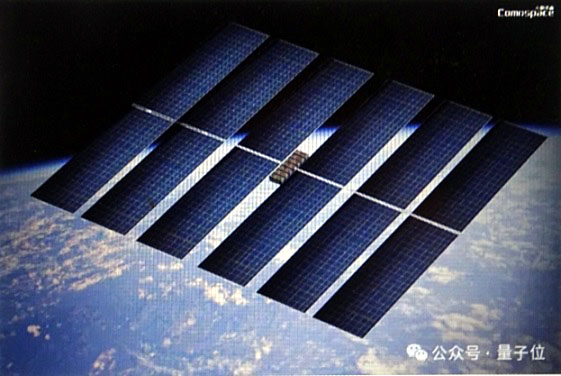
However, a Nov. 28 article titled “A Chinese powerhouse is building a space supercomputer!” on the Weixin social media page, reported that since 2019 a Chinese space data center project has been led by “CAS Space Computing,” a subsidiary of the Chinese commercial space launch company CAS Space.
Full Text . . . . Current Edition . . . . Subscription Information

U.S. and China also in race to build space-based AI data centers added by Cosmic1 on
View all posts by Cosmic1 →
You must be logged in to post a comment Login