

Special to CosmicTribune.com, August 20, 2026
By Richard Fisher
On Aug. 5, 2026, a nearly 4-ton upper stage to a SpaceX Falcon-9 rocket crashed into the Moon creating an 18-meter-wide crater.
More than 60 spacecraft or other man-made objects have crashed into the Moon since 1959, but there is growing concern that lunar traffic coordination is needed as the United States and China race to build Moon Bases.
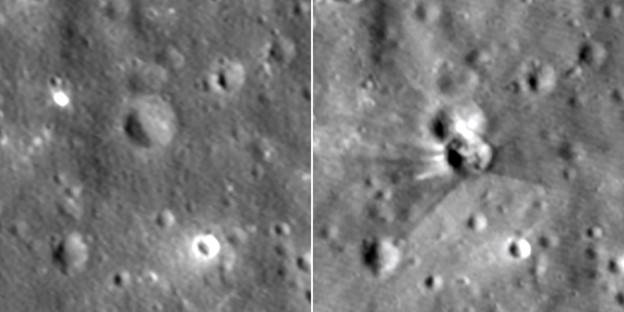
The Falcon-9 had been launched in January 2025 to carry a probe to the Moon, but lunar gravity drew in its remaining upper stage. Lunar gravity also caused the March 4, 2022 crash of a 2.8-ton Chinese Long March 3C upper stage, launched in 2014 for the Chang’e-5 moon probe mission, and creating a 29-meter crater.
On Aug. 6 Chinese state media was quick to tout that the Falcon-9 crash had been observed by China’s Gande-1 01 space debris monitoring satellite, just launched on July 24 on a Lijian-1 commercial space launch vehicle
On Aug. 7, Chinese state media CGTN reported:
“A Chinese commercial space debris monitoring satellite has successfully tracked and recorded the moment a SpaceX Falcon 9 rocket second-stage remnant smashed into the moon, marking a significant achievement for the country’s commercial space monitoring capabilities.”
The day before on Aug. 6, the South China Morning Post noted the Gande-1 01 observation, “In a show of space surveillance strength, a newly launched Chinese satellite tracked a piece of a SpaceX Falcon 9 rocket crashing into the moon and captured footage of its impact.”
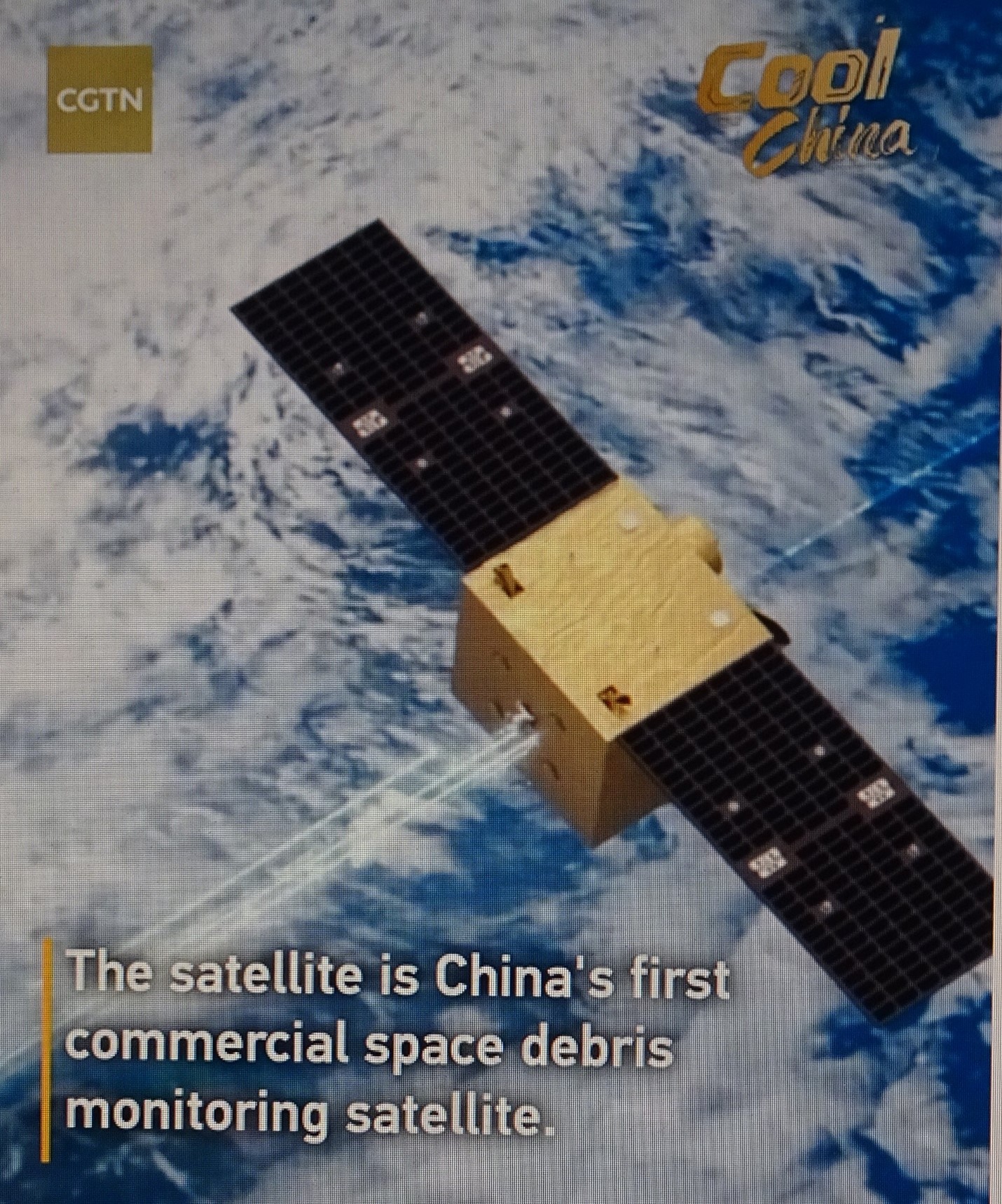
The Gande-1 01 was able to monitor the Falcon-9 upper stage crash from a distance of 380,000 kilometers, and the Gande constellation is planned to have 120 satellites, meaning it could contribute to People’s Liberation Army national missile defense or orbital space combat missions — that could now extend to lunar orbits.
The Falcon-9 crash prompted an Aug. 17 op-ed in SpaceNews by Therese Jones, Research Manager at the European Space Policy Institute and a former U.S. National Aeronautics and Space Administration (NASA) senior advisor, who wrote:
“By 2030, both the United States and China anticipate crewed landings on the lunar surface. With a mere two to four years until those landings are scheduled to occur, there is minimal time to coordinate lunar safety guidelines to not only protect robotic missions, but also the human lives and infrastructure needed for long-duration crewed missions.”
Full Text . . . . Current Edition . . . . Subscription Information

Crashing rockets, new Moon craters and China threats added by Cosmic1 on
View all posts by Cosmic1 →
You must be logged in to post a comment Login