

Special to CosmicTribune.com, July 30, 2026
By Richard Fisher
The Philippines has ambitions to develop both a national space capability and a new military space force; Both should be opportunities for the Philippines and the United States to strengthen their alliance cooperation.

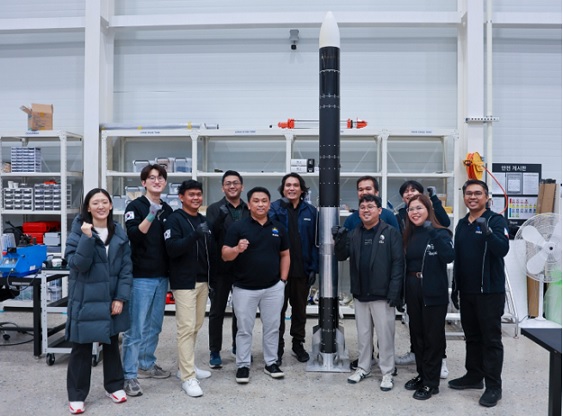
During his July 27 State of the Nation Address, Philippine President Ferdinand Marcos announced that in 2027 the Philippines would launch its first sounding rocket from a new spaceport at Cagayan North International Airport in Cagayan Province, Northern Luzon.
President Marcos noted, “Cagayan is both geographically and economically primed to serve as our gateway to space and host the country’s first spaceport. A sounding rocket launch test is slated for next year.”
In a July 28 press release, Philippine Space Agency Director General Gay Jane Perez stated:
“Our vision is for the Philippines to have a spaceport that serves as a gateway for safe, responsible, and sustainable space access for the region and the world. It will be a commercial-driven, government-enabled spaceport, with predictable timelines for launch licensing and authorization.”
Director General Perez added, “As global launch rates continue to accelerate, existing spaceports cannot serve this increasing demand. With the Pacific Ocean to its east and its proximity to the equator, the Philippines is well positioned for safe and secure rocket launch and recovery operations, helping reduce costs, improve launch efficiency, and create opportunities for future launch services.”
Founded in 2019, the Philippine Space Agency had a proposed 2026 budget of approximately $24 million, having originally sought about $43 million to expand crucial environmental monitoring and to pursue satellite and space launch programs.
In early 2027, aboard a SpaceX Falcon-9 space launcher, the Philippines plans to launch its Multispectral Unit for Land Assessment (MULA), a 130-kilogram small satellite with a 5-meter resolution, developed with Britain’s Surrey Satellite Technologies Ltd. (SSTL).
The MULA satellite will greatly expand the Philippines’ ability to react to damages caused by often violent national weather patterns, an essential service for the Philippine people.
But in addition to its broader space education outreach and its valuable liaisons with other space partner nations and with multilateral space organization at the United Nations or the annual International Astronautical Congress, the Philippine Space Agency also provides warning to the country of China’s space launches.
In 2026 so far, the Philippine Space Agency has posted 11 “Rocket Launch Advisory” notices on its web page, and 21 such notices in 2025 — about 50 percent of all press releases — all detailing the landing zones for the rocket stages of rockets launched from China.
Chinese space launch vehicles are usually aimed at the Philippines from three directions; From the north that see stages impacting to the east of the Philippines; From internal launch bases like Xichang, that can see rocket stages falling near the island of Palawan and in the internal Philippine sea; And from Hainan Island’s Wencheng Satellite Launch Center, with rocket stages falling near the top of Luzon.
Chinese rocket stages have not yet hurt or killed any Filipinos but they do pose a significant hazard to maritime safety, and this problem will grow exponentially very soon when Chinese state-owned and private companies begin launching multi-stage rockets, from expanded commercial launch facilities at Xichang and Wencheng.
Full Text . . . . Current Edition . . . . Subscription Information

Philippine space ambitions could counter China aggression, strengthen U.S. alliance, added by Cosmic1 on
View all posts by Cosmic1 →
You must be logged in to post a comment Login