

Special to CosmicTribune.com, November 19, 2026
The Pentagon, U.S. Air Force and U.S. Space Force have designated cislunar space — the region between Earth and the Moon — as a high-priority warfighting domain, aiming to field initial capabilities by late 2029.
The U.S. Air Force is surveying industry for ready-made artificial intelligence and machine learning software geared toward autonomous space vehicles operating outside of the near-Earth domain, a new document says.
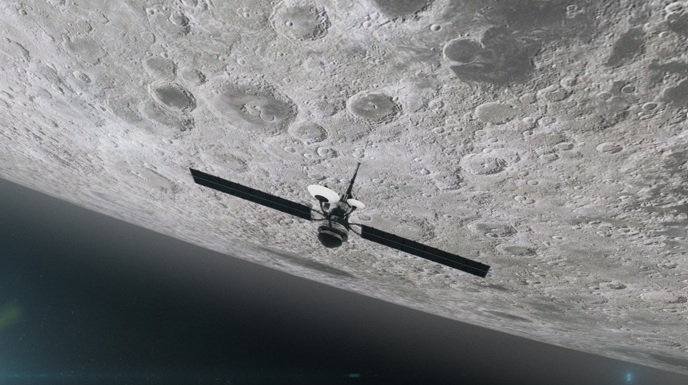
The service is seeking out “flight-ready” concepts to help cislunar space vehicles run through autonomous maneuvers like “station-keeping, trajectory optimization, and hazard avoidance” of objects moving outside of planetary orbit, according to a request for information (RFI) published on Nov. 9.
“The Government has an over-arching policy objective to develop a sustained architecture beyond earth orbit,” the RFI states. The replies, due Dec. 4, should drive future requirements, it says.
“Communication latencies that result from the increase in volume may mean that traditional, ground-based, command and control and mission planning systems are no longer scalable on operationally relevant timelines,” the RFI states.
The Air Force is asking for industry expertise in the form of white papers that should outline concepts for the cislunar domain around five topics: autonomous mission planning, predictive analytics, trajectory planning, computer vision and other potential technical areas, according to the RFI.
The service wants fully developed autonomy software that would require no development and little training inside of 90 days of an “Authority to Proceed” order and to be fully qualified within a year and a half, per the RFI.
The RFI follows comments from Tom Ainsworth, principal deputy assistant secretary for space acquisition and integration, who said in March the Space Force would start standing up leadership positions to acquire technologies to target the cislunar mission area. Ainsworth was performing the duties of Air Force assistant secretary for space acquisition and integration at the time.
The information gleaned from industry may yield Air Force investment in future studies around the concept, although the RFI stresses that the service wants to see industry’s ability to deliver readily available software fast.
Space Force and Pentagon officials point to China’s plans to land astronauts on the Moon by 2030, establish a lunar research station, and build sustained cislunar operations.
Leaders warn that key areas — such as safe landing sites near water ice at the lunar south pole — and cislunar orbits could become contested.
Full Text . . . . Current Edition . . . . Subscription Information

U.S. Space Force shifts focus to cislunar space as potential combat zone added by Cosmic1 on
View all posts by Cosmic1 →
You must be logged in to post a comment Login